

Lust
Para fugir das dores e angústia, a luxúria e o desejo

Crítica em português
Que a raiz dos vícios é a tentativa desesperada de anestesiar a dor, preencher vazios ou conferir sentido, significado e propósito ao que parece somente caos, já sabemos. Há dependência químicas, comportamentais e também aquelas inscritas no próprio corpo que abriga a mente ou alma adoecidas ou machucadas; a luxúria não é prazer, mas é uma linguagem através da qual Lilian (Snejanka Mihaylova) elabora o que não pode elaborar racionalmente. É neste terreno que se move Lust, o 2. longa-metragem da búlgura Ralitza Petrova.
No roteiro escrito por Petrova, Lilian é uma psicóloga prisional que deve retornar ao seu país natal depois da morte do pai, não apenas para enterrá-lo, mas para lidar com os escombros emocionais e heranças materiais e simbólicas que ele deixou para trás. No apartamento herdado junto com as dívidas, ela confronta não só a memória de um abandono, mas uma pulsão que se manifesta na busca deliberada pela dor física como uma forma de contato com algo que ainda possa ser sentido. Daí ser intrigante que a personagem esteja atravessando um período de abstinência, e a ansiedade despertada pelo trauma desperte o desejo de um sexo enxergado como submissão.
O problema é que Petrova parece acreditar que a mera sugestão de conflitos íntimos e psicológicos mal resolvidos já é o suficiente para conferir densidade à narrativa, que é um estudo de personagem no final das contas. E não auxilia esta narrativa a aderência estilística às convenções ou clichês do cinema do Leste Europeu: planos dilatados com silêncios incômodos e prolongados, ou uma encenação bastante minimalista, para não dizer rarefeita, como uma forma de acessar a personagem internamente. No entanto, e não é espanto, Lilian permanece um enigma: não porque é complexa, mas sim porque o roteiro recusa-se a construí-la para além de sugestões rasas, respostas superficiais e muita opacidade.
Um exemplo disso está na maneira como se relaciona com o sujeito a quem o pai devia dinheiro; ele é surpreendido por ela dentro do apartamento em ocasiões distintas. Mas se na primeira, o choque da presença (silenciosa) dela produz alguma tensão justo por se tratar de um encontro inesperado, na segunda o gesto revela só a preguiça narrativa de repetir um mesmo dispositivo para provocar uma virada na trama com informações e segredos que poderiam ser revelados de um modo mais orgânico. O mesmo se aplica às interações com personagens do sexo masculino e que insistem em deslegitimar sua experiência, como o chaveiro que sugere que se conhece uma mulher pela forma como fecha a porta, como se o gesto revelasse também a sua disposição ao silêncio. A tensão de gênero beira o didatismo, a propósito, quando o teste aplicado por Lilian a presos é desprezado exatamente por seu gênero.
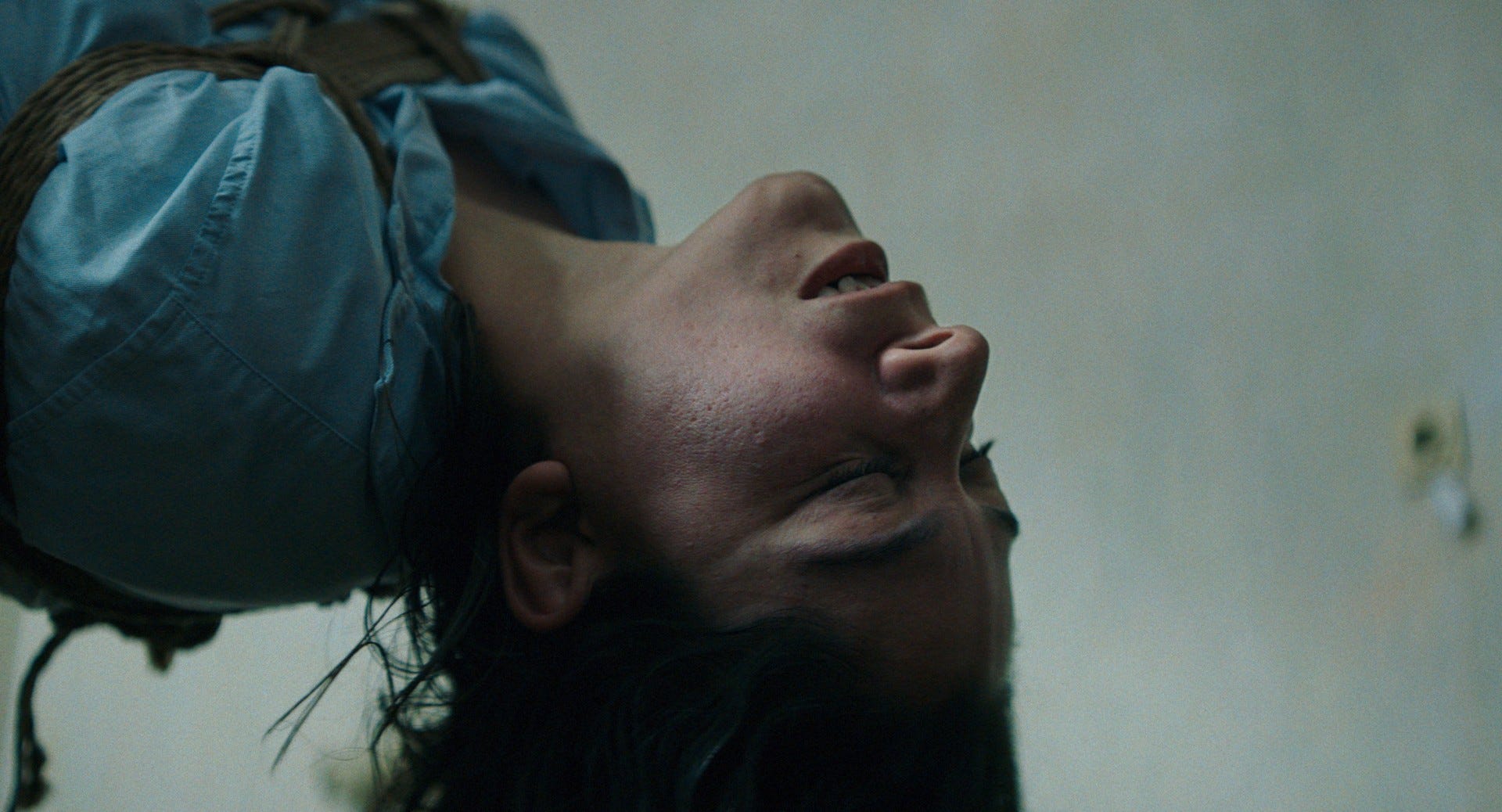
O simbolismo tampouco escapa ao óbvio. E um filme intitulado Lust que se inicia com a imagem de uma cobra anuncia, sem sutileza, a sua associação com o pecado original. A presença de um herpetólogo que alimenta o animal - que tem, ele próprio, questões e dores que precisam ser atendidas - e se envolve com Lilian reforça uma equivalência quando a cobra enrolada no braço confunde-se com a prática do shibari, o fetiche (ou a arte) da amarração. Ao contrário da cobra, Lilian não pode simplesmente descartar a sua pele, ou seja, recomeçar a sua vida sem dores, angústias ou traumas.
Além do mais, a crítica da misoginia, embora válida e legítima, é óbvia e explícita para ser narrativamente interessante; todos os personagens do sexo masculino, de um jeito, ou de outro, menosprezam, desprezam ou ofendem Lilian de alguma maneira. A isto, a ausência materna e o abandono na infância, e o modo como isto se corresponde com a sua experiência profissional: ao tomarmos conhecimento de seu passado, a montagem corta para uma entrevista com o mesmo presidiária que a havia destratado no início e que a questiona sobre a sua autoridade moral para julgá-lo e a sua (suposta) posição de privilégio para fazê-lo. A intenção é nobre - não conhecemos Lilian para julgá-la - mas a execução é esquemática demais, pois não se passou nem 1 minuto quando soubemos que a sua infância foi tudo menos privilegiada.
Repleto de lacunas, o roteiro é menos enigmático e mais preguiçoso: não está clara a situação financeira de Lilian, o que reforça a contradição de não pode arcar com 3 mil euros, mas poder arcar com os custos de viagens (no plural). Além do mais, para um estudo de personagem, embora esteja claro o ponto inicial de onde Lilian partiu, não posso afirmar o mesmo qual o ponto final (narrativo). E, para um filme chamado Lust, nada é explorado aprofundadamente e explicitamente. A atuação apática de Snejanka Mihaylova, por definição da personagem mais do que por inabilidade da atriz, não se abre para o espectador senão em um aparente fardo existencial ou mal-estar inscritos no desejo dela de ser amarrada.
No fim, o que deveria ser um estudo (investigação) de personagem, é um exercício de formalismo, em que a contenção é confundido com profundidade humana, emocional e até psicológica. Mas não há muito que faça a força da personagem vibrar para além da superfície narrativa, infelizmente.
O filme está na Mostra Fórum do 76. Festival de Berlim.
English review
That the root of addictions lies in the desperate attempt to anesthetize pain, fill voids, or confer meaning, significance, and purpose upon what otherwise feels like chaos, we already know. There are chemical and behavioral dependencies, and also those inscribed in the very body that houses a wounded or damaged mind or soul; lust is not pleasure, but rather a language through which Lilian (Snejanka Mihaylova) processes what she cannot process rationally. It is within this terrain that Lust, the second feature film by Bulgarian filmmaker Ralitza Petrova, operates.
In the screenplay written by Petrova, Lilian is a prison psychologist who must return to her native country after her father’s death, not merely to bury him, but to deal with the emotional debris and the material and symbolic inheritances he left behind. In the apartment she inherits along with his debts, she confronts not only the memory of abandonment, but also a drive that manifests itself in the deliberate pursuit of physical pain as a way of feeling something that can still be felt. Hence it is intriguing that the character is going through a period of abstinence, and that the anxiety awakened by trauma in turn awakens the desire for sex perceived as submission.
The problem is that Petrova seems to believe that the mere suggestion of unresolved intimate and psychological conflicts is sufficient to grant the narrative density, which is, in the end, a character study. Nor does it help that the film stylistically adheres to the conventions or clichés of Eastern European cinema: elongated takes filled with uncomfortable and prolonged silences, or a highly minimalist staging, not to say rarefied, as a supposed means of accessing the character internally. And yet, unsurprisingly, Lilian remains an enigma: not because she is complex, but because the screenplay refuses to construct her beyond shallow suggestions, superficial answers, and abundant opacity.
An example of this lies in the way she relates to the man to whom her father owed money; he is surprised by her presence inside the apartment on separate occasions. If, the first time, the shock of her (silent) presence generates some tension precisely because it is unexpected, the second time the gesture reveals only narrative laziness in repeating the same device to trigger a plot turn through information and secrets that could have been revealed more organically. The same applies to her interactions with male characters who insist on delegitimizing her experience, such as the locksmith who suggests that one can know a woman by the way she closes a door, as if the gesture also revealed her disposition toward silence. The gender tension borders on didacticism, incidentally, when the test applied by Lilian to inmates is dismissed precisely because of her gender.

The symbolism does not escape obviousness either. A film entitled Lust that opens with the image of a snake announces, without subtlety, its association with original sin. The presence of a herpetologist who feeds the animal - who himself has issues and wounds that require attention - and becomes involved with Lilian reinforces an equivalence when the snake coiled around an arm merges visually with the practice of shibari, the fetish (or art) of binding. Unlike the snake, Lilian cannot simply shed her skin, that is, restart her life without pain, anguish, or trauma.
Moreover, the critique of misogyny, though valid and legitimate, is too obvious and explicit to be narratively compelling; all the male characters, in one way or another, belittle, disregard, or offend Lilian somehow. Added to this is maternal absence and childhood abandonment, and the way this corresponds to her professional experience: once we learn of her past, the editing cuts to an interview with the same inmate who had previously disrespected her and who questions her moral authority to judge him and her (supposed) position of privilege in doing so. The intention is noble - we do not know Lilian well enough to judge her - but the execution is overly schematic, since not even a minute has passed since we learned that her childhood was anything but privileged.
Filled with gaps, the screenplay is less enigmatic and more careless: Lilian’s financial situation is unclear, which reinforces the contradiction of being unable to afford 3,000 euros while being able to pay for multiple trips. Furthermore, for a character study, although the starting point from which Lilian departs is clear, I cannot say the same about her narrative endpoint. And, for a film titled Lust, nothing is explored in depth or explicitly. Snejanka Mihaylova’s apathetic performance, by definition of the character rather than through any inability on the actress’s part, opens itself to the spectator only through an apparent existential burden or malaise inscribed in her desire to be bound.
In the end, what should have been a character study (an investigation) becomes an exercise in formalism, in which restraint is mistaken for human, emotional, and even psychological depth. Yet there is little that allows the force of the character to resonate beyond the narrative surface, unfortunately.